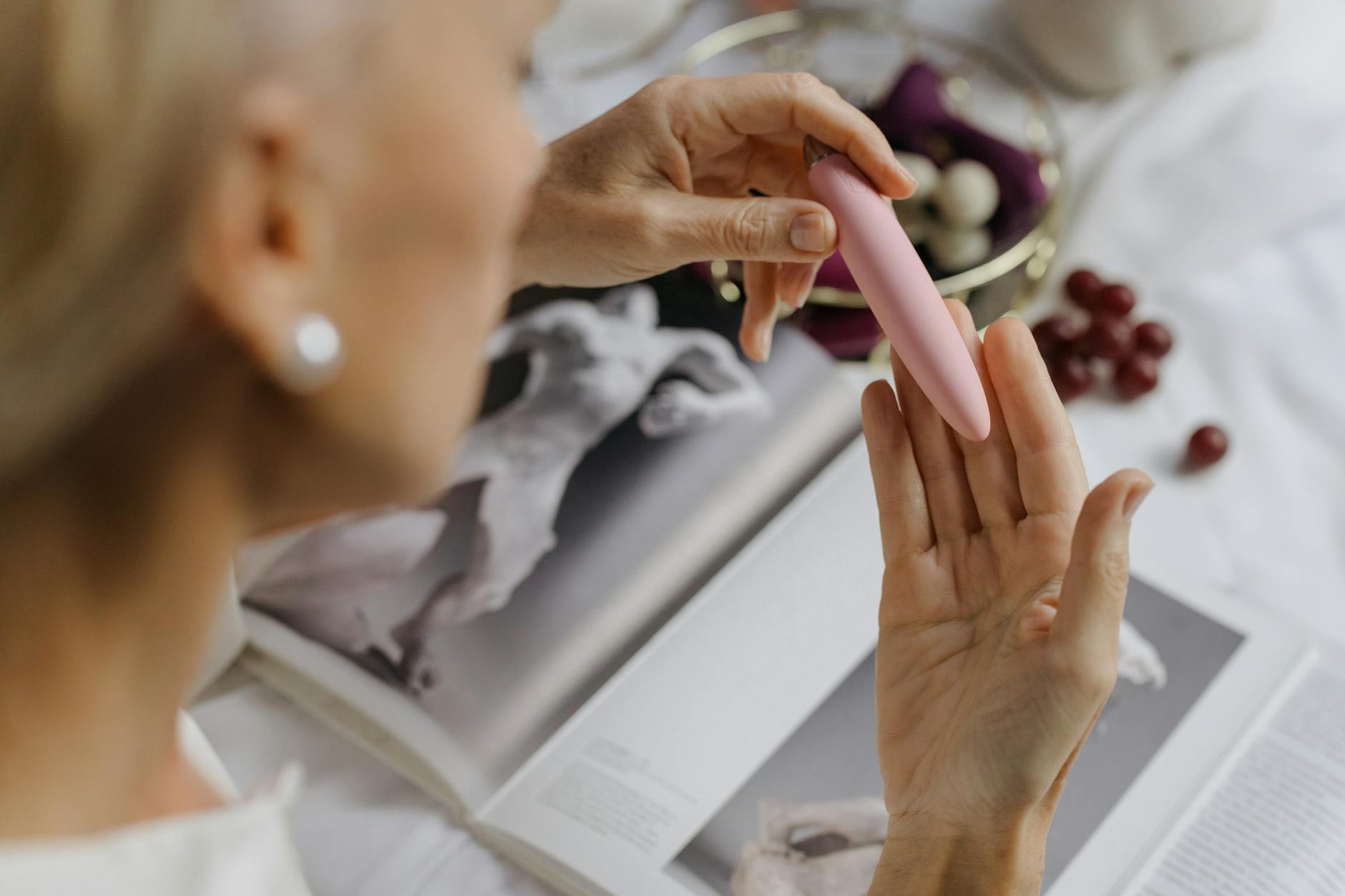
How to Use Lemon Vibrators for Better Sensation in Your Thirties
Let's be real. You're not broken if orgasms feel harder to reach at thirty-five than they did at twenty-five. That's not a decline. That's physiology doing something weirdly smart.
Your nervous system is actually becoming more mature, your skin is thicker, and your pelvic floor is stronger. What people mistake for "less sensitive" is actually just a shift in where and how you feel things. The frustrating part: toys that worked perfectly at twenty-five might feel either too intense or not quite right anymore. This is especially true with traditional vibrators. Lemon vibrators, though, work with these changes rather than against them.
I've worked with hundreds of people navigating this exact transition. The ones who understand what's actually happening at thirty-something tend to have better orgasms than they did in their twenties. That's not optimism talking. It's data.
What changes in your nervous system around thirty
Your clitoral tissue doesn't disappear. It does get slightly less sensitive to very rapid, repetitive vibration. This is because your epidermis (the outermost layer of skin) thickens slightly with age. It's protective, but it means direct percussion vibration sometimes feels more like noise than pleasure.
At the same time, your ability to feel sustained pressure and suction improves. Your pelvic floor muscles are denser. The nerve endings in your clitoris are still absolutely there, but they respond better to variation and intentional pressure than to relentless buzzing.
Here's what your twenty-five-year-old body did: "Oh, vibration. Yes, that works." Here's what your thirty-five-year-old body does: "Show me what else you've got."
Why lemon vibrators hit different after thirty
Lemon clitoral vibrators use air-suction technology instead of traditional vibration. Instead of moving back and forth very quickly, they create gentle pulses of suction that stimulate the clitoral complex as a whole structure, not just the surface.
This matters because around thirty, your body's relationship to surface-level buzz changes. Your clitoral hood (the protective fold of skin over your clitoris) actually becomes more pronounced with age. That's completely normal. It means surface vibration sometimes has to work harder to reach the nerve clusters. Suction bypasses that problem entirely. It pulls the tissue into the device gently, stimulating the entire clitoral structure at once, which is exactly what your thirty-something nervous system is wired to enjoy.
People I've worked with often describe the shift like this: "Vibrators used to make me come. Lemon vibrators make me feel like I'm coming." There's a huge difference.
The sensation breakthrough of air-pulse technology
Lemon vibrators deliver micro-pulses of suction rather than constant vibration. This creates several advantages in your thirties.
First, they don't numb. Traditional vibrators, used continuously, can create desensitization because they're asking the same nerve endings to respond to the same stimulus over and over. Your nervous system gets tired. Suction-based stimulation from a lemon vibrator feels different with each pulse, which keeps your nerve endings engaged. You can use it for thirty minutes without losing sensation.
Second, they feel more intense without being harsher. You're not grinding tissue. You're gently pulling stimulation inward. This is gentler on the external structures but often feels more powerful internally because it engages deeper nerve clusters.
Third, there are usually multiple settings. On a Lem vibrator, you can adjust both the intensity and the pattern. This means you can start at a level that matches where you are on any given day, then build. In your thirties, when stress might tighten your pelvic floor or hormonal shifts might change sensation week to week, this flexibility is invaluable.
How to adjust your technique for better results
Just because lemon vibrators work well for your current body doesn't mean you can use them exactly like you used other toys before. Here are the adjustments that make the biggest difference.
Start with suction, not vibration. Many Lem vibrators have a suction-only mode. Use it first. This warms up the tissue and gets blood flowing. Your clitoris becomes more engorged, which means the device has more tissue to work with. After two to three minutes of suction-only, then activate the pulses.
Use consistent positioning. Unlike traditional vibrators that work at various angles, suction technology needs a proper seal. Position the device so the opening sits flush against your clitoris or just over the clitoral hood. Once you find the right spot, try not to shift around. This isn't about being rigid. It's about letting your body relax into stimulation rather than chasing it.
Don't jump straight to high intensity. In your thirties, higher intensity doesn't mean faster or buzzier. It usually means stronger suction. Start at pattern one or two, spend a minute there, then move up. This lets your nervous system adjust gradually. You'll often find that medium intensity on a lemon vibrator feels more powerful than high intensity on a traditional toy.
Use lubricant even if you don't think you need it. Lubrication isn't just about comfort. It helps create a better seal for the suction device and actually intensifies sensation. Water-based lube works best with silicone toys. Two pumps is usually plenty.
The pelvic floor part nobody talks about
Around thirty, your pelvic floor naturally strengthens. This is protective, but it can also make you grip more during arousal without realizing it. When your pelvic floor is tense, pleasure gets trapped in that tension instead of moving through your whole body.
Before using your lemon vibrator, spend thirty seconds on pelvic floor awareness. Lie down, put your hand on your lower belly, and breathe deeply. On each exhale, deliberately relax the muscles around your vagina and anus, like you're releasing a grip. This single step often makes orgasms more accessible because you're not fighting against your own tension.
During use, if you feel yourself tensing up as sensation builds, pause the vibrator for a breath or two and relax. This isn't stopping pleasure. It's the opposite. It lets pleasure move instead of getting stuck.
Partnered use changes in your thirties too
If you have a partner, your body's relationship to partnered pleasure might feel different now than it did a decade ago. Your clitoris might need more direct stimulation to reach orgasm, or it might need slower buildup. This isn't a problem. It's just different.
Many people in long-term relationships in their thirties find that using a lemon vibrator during partnered sex actually deepens intimacy because it removes pressure on their partner to be the only source of stimulation. You're sharing pleasure more equitably. You're also more likely to reach orgasm, which generally improves the whole experience for everyone.
If you're nervous about introducing a clitoral vibrator to partnered sex, start with foreplay. Use it on yourself while your partner touches you elsewhere. This removes the sensation of performance and lets both of you get comfortable with the device before it becomes part of intercourse.
Why sensation shifts aren't permanent
Your thirties aren't a fixed point. You'll continue changing in your forties, fifties, and beyond. The good news is that understanding how your body responds now makes it easier to adapt as you age. When you know what works, you can adjust the tool instead of blaming your body.
Many people report that their most satisfying orgasms come after they stop fighting their body's changes and start working with them. Using a lemon vibrator is often the thing that makes that shift possible. It's not a hack. It's alignment.
The research backs this up too. Studies on air-pulse technology show that people who switch from traditional vibrators often report more consistent orgasms and higher satisfaction. The shift isn't because they're using a toy. It's because they're using a tool that matches their body's current capacity.
When to see someone (beyond just using a lemon vibrator)
If you're in your thirties and sensation has completely flattened despite trying different approaches, it might be worth checking in with a healthcare provider. Sometimes reduced sensation signals something worth exploring. Thyroid function, medication side effects, or depression can all affect pleasure. None of those are reasons to give up. They're just reasons to get support.
If you're partnered and pleasure feels disconnected from intimacy more broadly, a couples therapist can help you rebuild that connection. Sensation often returns when the relationship feels safer and more connected overall. A lemon vibrator can be part of that rebuilding, but it's not the whole thing.
FAQ
Can lemon vibrators cause numbness like traditional vibrators do?
Numbness usually happens with traditional vibrators because they stimulate the same nerve endings with the same repetitive stimulus for extended periods. Your nervous system essentially gets tired of responding. Lemon vibrators create variation with each pulse because the suction isn't constant. Each sensation is slightly different, which keeps your nerve endings engaged. Most people can use a Lem vibrator for thirty to forty minutes without losing sensation, whereas traditional vibrators often cause numbing after fifteen to twenty minutes.
Is it normal for sensation to be different in one spot than another?
Completely normal. Your clitoris has different nerve densities in different areas. Your clitoral glans (the visible tip) might be super sensitive, while the shaft responds better to broader pressure. As you age, these variations often become more pronounced. This is actually useful information because it tells you exactly where you like to position your lemon vibrator.
Do I need to use higher intensity settings as I get older?
Not necessarily. "Higher" doesn't always mean better. Some people find they need stronger suction. Others find they prefer more pattern variation. Start at lower settings and notice what actually feels good instead of what you think should feel good. Your body is the expert here.
How do lemon vibrators compare to other clitoral toys for people in their thirties?
Traditional vibrators tend to feel more intense upfront but often cause quicker desensitization. Wand vibrators can work beautifully but sometimes feel heavy or require uncomfortable angles. Lemon vibrators sit in a sweet spot: they build intensity gradually, they don't numb, and they work at almost any angle. For people navigating sensation shifts in their thirties, they're often the easiest entry point to pleasure that actually lasts.
Can a lemon vibrator help if my partner and I have different arousal speeds?
Yes. If your partner reaches arousal or orgasm faster than you do, using a lemon vibrator during foreplay or partnered sex means you're not dependent on their timeline. You can reach your own peak while they're present and involved. This takes a lot of pressure off both of you and often makes the overall experience more connected, not less.
What if I'm not sure about using a sex toy at all?
That's a fair question and worth exploring separately from sensation. Here's what I've noticed: people in their thirties who were taught that sex toys are unnecessary or wrong sometimes feel stuck when their body's responsiveness changes. A lemon vibrator isn't about fancy or kinky. It's a tool for understanding your body better. You might start by exploring solo, without any pressure to integrate it into partnered sex.
The honest takeaway
Your thirties are not a decline in pleasure. They're a transition. Your body is different, and that difference is mostly in your favor if you understand what's actually happening. Lemon vibrators work brilliantly for this transition because they're designed around how your nervous system actually functions as you age, not against it.
Start slow. Notice what feels good. Adjust your technique based on what you discover. And remember: if your body is responding differently now than it did ten years ago, that's not a problem to solve. That's information to use.