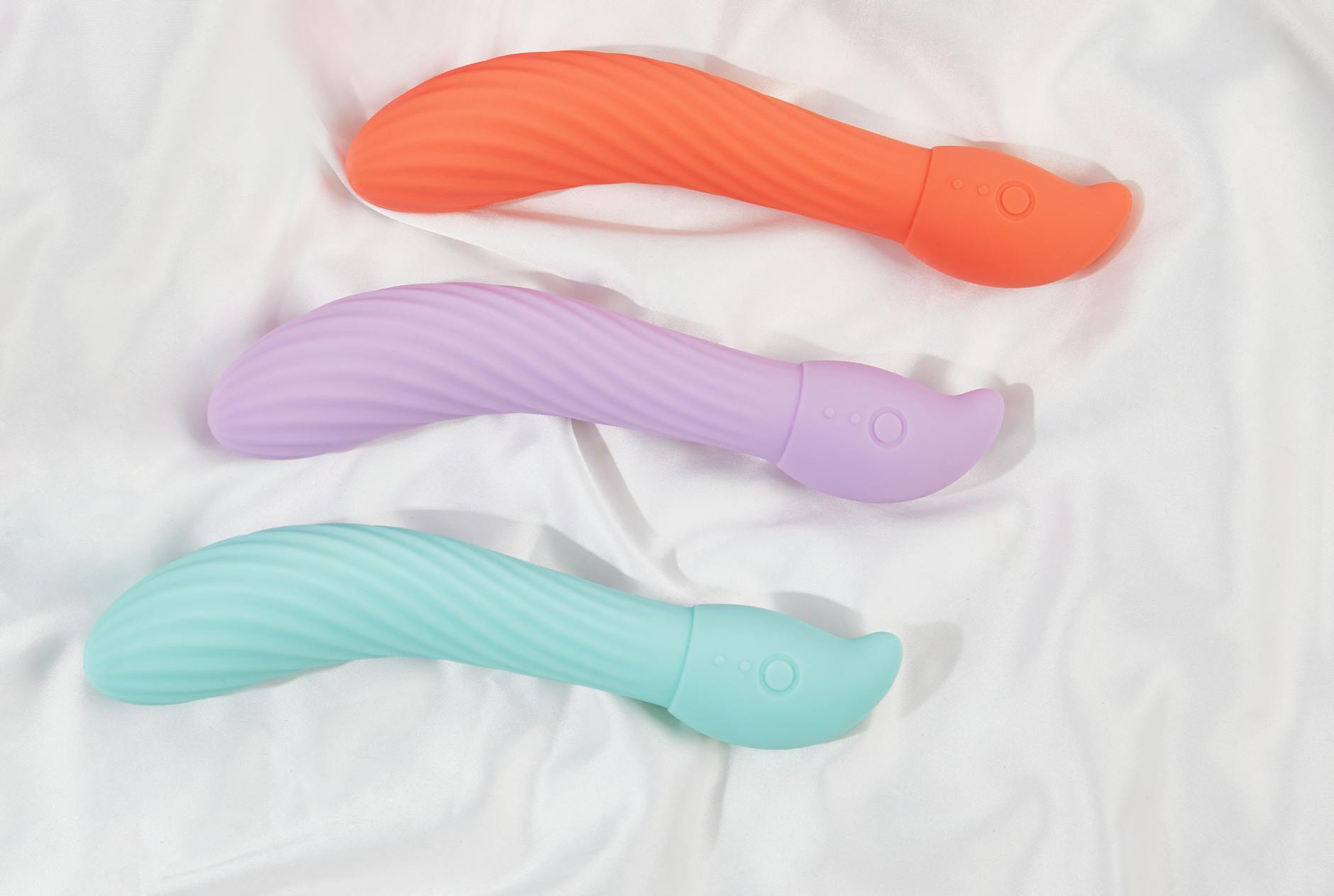
Let's name what's actually happening here
You've been away from your body for a while. Maybe it was a breakup, a health crisis, depression, a demanding season of work, or just life pressing pause on pleasure. Whatever the reason, the thought of restarting your sexual life can feel overwhelming, awkward, or even a little bit scary. That's completely normal. Your body hasn't forgotten how to feel pleasure. But your nervous system might have forgotten how to trust that pleasure is safe right now.
That's where lemon clitoral vibrators can actually help in ways that fingers or partners alone sometimes can't. They give your body permission to wake up on its own timeline, with a predictable rhythm and zero performance pressure. I've worked with countless clients who've restarted their pleasure after long breaks, and the ones who succeeded fastest weren't the ones who forced it. They were the ones who treated their return like a practice, not an exam.
Why lemon vibrators specifically work for this transition
There's something about air-suction technology that feels less invasive for bodies that have been dormant. Unlike traditional vibrators that require direct friction on sensitive tissue, lemon suckers like Hello Nancy's Lem create a gentle, rhythmic suction that mirrors how pleasure actually builds naturally. For people restarting, this matters because your clitoral nerves haven't lost sensitivity. They've just been quiet.
A lemon vibrator wakes them up gently. The sensation is novel enough to feel engaging without being so intense that it triggers your nervous system into fight-or-flight mode. When you've been away from sex, your body can sometimes interpret strong stimulation as threat rather than pleasure. Suction bypasses that by feeling more like a massage than an invasion.
The second reason is psychological. When you're nervous about restarting, having a tool that does one thing really well reduces decision fatigue. You don't have to wonder if you're touching yourself right or question whether your partner is doing it correctly. The lemon clitoral vibrator has one job: create steady, consistent stimulation. Your only job is to notice how it feels.
The timeline: what to expect week by week
Weeks one and two are about reconnection, not orgasm. If you haven't had sexual thoughts or feelings in a while, your body might need a gentle reintroduction to what arousal even feels like. Start with 5-10 minute sessions alone, no pressure to climax. This is clinical, intentional touching. Use your lemon sucker on pattern one or two. Notice the sensation. Does it feel good? Too strong? Just right? There's no wrong answer here.
Weeks three and four, you can extend to 15-20 minutes and experiment with patterns three through five if earlier ones felt too mild. Your nervous system is learning that pleasure is safe again. This is the phase where many people start noticing genuine arousal returning. You might feel more sensitive, more responsive, more interested. That's the whole point.
By week five or six, if you're partnered, this is when you might introduce your partner to your practice. Not to perform for them, but so they can watch and understand what you're building. This is radically unsexy, by design. You're teaching them your new landscape, not recreating what sex used to look like.
The setup matters more than you think
If you're returning to sex after a long break, your nervous system is probably still on high alert about other things too. Work stress, relationship worry, family stuff. You cannot successfully restart pleasure in chaos. Here's the non-negotiable setup.
Find a room where you won't be interrupted. Phone on silent, door locked. Thirty minutes minimum, even if you only use the lemon vibrator for ten of them. Your body needs to know that time is actually yours. Many clients find that the anticipation built into the extra time is as important as the stimulation itself. Your nervous system relaxes when it knows you're not rushing.
Second, water-based lubricant. If you've been away from sex, your body might not produce much natural lubrication at first. That's not a sign something's wrong. It's a sign your body hasn't been signaled yet that arousal is happening. A good water-based lube gives your tissue the glide it needs without forcing anything. Start with a dime-sized amount. You can always add more.
Third, manage the temperature. A cold bedroom makes it hard to relax. Aim for warm enough that you're comfortable in minimal clothing. Some people light a candle or play music. Others prefer silence and low light. The only rule is that your environment should feel safe and unhurried.
Pattern selection: starting slow isn't boring
Most lemon adult toys have seven to ten different suction and vibration patterns. The instinct when restarting is to jump straight to the strongest ones. Don't. Start with pattern one and stay there for three or four sessions. I know it sounds repetitive. The repetition is the point. Your body needs to trust the sensation before it can fully respond to it.
Pattern one should feel like a gentle, consistent pulse. Not tickling, not numbing. If it feels weak, you haven't waited long enough. Give it two more sessions. If after five sessions pattern one still feels underwhelming, move to pattern two. But honestly, most people find that what felt mild on day one feels increasingly pleasurable by day five. Your body is waking up.
Once you've spent a week or two with lower patterns, you can experiment upward. Many people returning to sex find their sweet spot around pattern four or five. Strong enough to feel clearly pleasurable, not so intense that it creates tension or desensitization.
What to do if pleasure doesn't feel immediate
Here's the thing about restarting after a break: your brain might be ready before your body is, or vice versa. Your mind might be thinking, "Okay, we're doing this," but your clitoris is stuck in neutral. That's not failure. That's your nervous system being appropriately cautious.
This is when you lean into sensation without outcome. Stop trying to climax. Seriously. Orgasm isn't the goal right now. Feeling anything at all is the win. Maybe you use your lemon vibrator and just notice that it feels interesting. Maybe you get aroused for the first time in a year. Maybe nothing happens and that's okay too. Your body will move at its own pace, and forcing it doesn't speed anything up.
If you're partnered and they're in the room watching, make sure they know this too. The worst thing a partner can do while you're restarting is watch your face for signs of pleasure. That's performance pressure disguised as care. A good partner sits quietly, maybe reading or present without demanding response from your body.
If depression or anxiety is part of why you took a break, and pleasure still isn't returning after a month of consistent practice, talk to your doctor. That's not a sign you're broken. That's a sign your brain chemistry might need support, separate from the physical practice. Many people restart pleasure much more easily once they're on the right medication or therapy.
Introducing a partner back into the equation
If you're restarting sex with a partner after a long break, you need to have a conversation before you use any tools together. Not during sex, not in the bedroom. Have it over coffee or dinner. Say something like: "I'm nervous about restarting our sex life. I'd like to use a lemon clitoral vibrator to help me build confidence again. I need you to know that this isn't about you not being enough. It's about me teaching my body to feel safe with pleasure again."
A good partner will get it. They might even want to understand how the lemon vibrator works, so they can use it on you eventually. That's beautiful. But the first phase is solo. Once you've spent four to six weeks rebuilding alone, you can invite them to watch, and eventually to participate.
When you do include your partner, start with non-penetrative sex. You and your lemon sucker, them watching or touching you in other ways. This teaches your body that pleasure can happen in the presence of your partner without it needing to be full intercourse. Intercourse is the advanced move. Start with this.
The confidence piece, which is everything
Restarting sex after a break isn't really about your clitoris. It's about believing that your body is worthy of pleasure and that you deserve time and attention on yourself. I see clients who have the perfect setup, the best lemon vibrator, a supportive partner, and still can't move forward because they're carrying shame about the time they lost or guilt about wanting pleasure when so much else feels broken.
That's the conversation that actually needs to happen first. Before you buy a lemon sexual toy or schedule time alone, ask yourself: "What story am I telling myself about my body right now?" Are you thinking, "I'm broken and need to be fixed?" Or "I'm human and I'm healing?" The second story works. The first one doesn't.
Your body hasn't forgotten how to feel pleasure. You're simply relearning that pleasure is available to you, even now, even after the break. That's worth taking time for. That's worth treating as a genuine practice, with patience and self-compassion built in.
People Also Ask
How long does it typically take to rebuild sexual desire after a long break?
There's no universal timeline, but most of my clients report noticing a significant shift in interest and arousal within four to eight weeks of consistent solo practice. The key word is consistent. One or two attempts won't cut it. Your nervous system needs repeated, safe experiences to believe that pleasure is trustworthy again. Some people feel shifts in two weeks. Others take three months. Both are normal.
Can I use a lemon clitoral vibrator if I'm also taking antidepressants or anti-anxiety medication?
Absolutely. If anything, lemon vibrators are helpful for people on those medications because they provide steady, predictable stimulation that doesn't require your body to generate its own neurochemical response. That said, some medications do dull sensation or delay orgasm. If that's happening, that's a conversation for your doctor, not something to work around alone. The lemon vibrator isn't a fix for medication side effects, but it can help you explore what pleasure feels like within your current body chemistry.
Is it weird to use a lemon sucker alone after being partnered for years?
Not even a little bit. In fact, it's often necessary. When you've been with a partner for a long time and then take a break from sex, your relationship to your own body gets fuzzy. Solo practice with a lemon clitoral vibrator helps you remember what your body likes independent of your partner's presence or preferences. This actually makes partnered sex better later because you know what you want and can ask for it clearly.
What if I use my lemon vibrator and nothing happens? Am I broken?
No. You're not broken. You're just still waking up. Many people don't feel pleasure the first few times because their body is processing safety first, sensation second. Keep going. If after six weeks of consistent practice you're still feeling nothing, that's worth mentioning to your doctor. But most of the time, the absence of feeling in week one doesn't mean anything except that you need a little more time.
Can a partner use a lemon sexual toy on me if I'm not comfortable using it on myself yet?
Yes, but I'd suggest solo practice first. When you're restarting, your nervous system needs to learn from your own hands and your own decisions about what feels good. Once you've done that for a few weeks, absolutely let your partner help. They can use a lemon vibrator on you, or you can use one while they're present. The solo phase just comes first so you rebuild trust in your own body before inviting someone else in.
Should I tell my partner about using a lemon clitoral vibrator, or is that private?
If you're partnered and restarting sex together, transparency about your tools and your timeline actually builds trust. You don't need to narrate your solo sessions or ask permission. But before you introduce any tools into shared sexual time, having a conversation helps. "I'm using a lemon vibrator to rebuild my confidence, and I'd like to use it with you eventually," is a conversation opener that most partners appreciate. It signals that you're being intentional, not secretive.
The bottom line
Restarting your sex life after a long break is brave, and it's completely normal to feel nervous about it. Lemon vibrators exist partly for exactly this reason. They give you a way to rebuild confidence, explore sensation, and remember that your body is capable of pleasure again, all at your own pace and without performance pressure. You don't need to rush. You don't need to look like you did before the break. You just need to show up consistently and let your body remember what it knows. That's enough. You're enough.