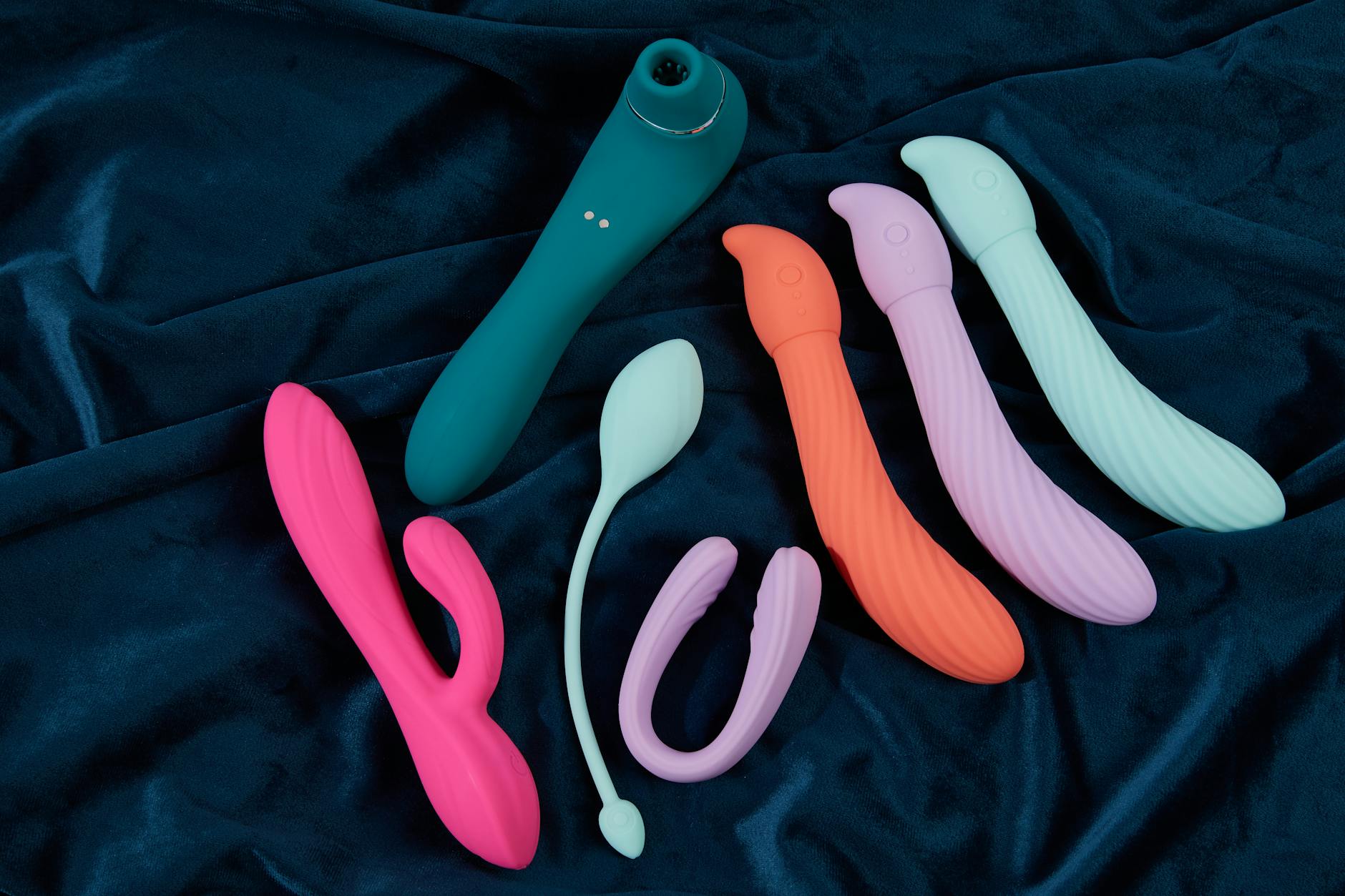
The awkward truth about shared pleasure
Let's be real: most conversations about using toys with a partner skip right over the hard part. Everyone acts like you'll both want the same thing at the same speed in the same way. You won't. And that's not a failure. It's just anatomy and wiring working differently in two different bodies.
I've worked with hundreds of couples introducing lemon vibrators and clitoral vibrators into shared sex, and the pattern is always the same. One person gets eager. The other needs more time. One wants the lemon sucker on the highest setting immediately. The other finds it overwhelming. One finishes in five minutes. The other needs thirty. Then everyone feels awkward, and the toy ends up in a drawer for six months.
This isn't a technical problem. It's a communication and timing problem. And it's completely solvable.
Why your arousal timelines don't match (and never will)
People are wired differently. One partner might have what's called a "accelerated arousal response." They get turned on fast, peak fast, and come fast. The other partner has a slower buildup. This isn't about effort or attraction. It's neurology.
Add to that: testosterone and estrogen don't work the same way in every body. Someone with higher baseline testosterone might feel arousal more like a switch. Someone with different hormone levels might feel it more like a dimmer. Neither is better. They're just different.
When you bring a lemon clitoral vibrator into the mix, this mismatch becomes visible. The faster partner wants to use it immediately. The slower partner isn't ready yet. One of you wants intensity. The other needs pattern rather than power. And suddenly the thing that's supposed to bring you closer feels like evidence that you're incompatible.
You're not. You're just operating on different timelines.
The setup that actually works
Here's what I tell couples: stop trying to synchronize. Start sequencing instead.
Sequencing means one person gets their warm-up time while the other partner provides it. That might mean your partner uses the lemon vibrator on themselves while you're still getting into it through touch, kissing, or oral sex. That's not selfish. That's efficient. They're not leaving you behind. They're getting their body ready so you can meet in the middle.
If you're the faster partner, your job is to get yourself to a good place and then hold there while your slower partner catches up. That might mean switching to a lower pattern on the lem vibrator. It might mean setting it down for two minutes. It might mean the lemon sucker goes on the shelf temporarily while you return to hands and mouth and reconnection.
If you're the slower partner, knowing that you can take your time changes everything. You don't have to rush. You don't have to perform readiness you don't actually feel. Your partner gets themselves to 80 percent, and you get yourself there at your actual pace. Then you meet.
Sensitivity differences (the real blocker)
One person finds the lemon vibrator's settings 1 and 2 too intense. The other person barely feels pattern 5. This is where people usually get frustrated and assume the toy isn't working or someone's body is broken.
Neither is true.
Clitoral tissue has wildly different nerve density from person to person. Some people's clits are packed with sensation. Others have lower density in the same area. Additionally, hormones change sensitivity. So do medications, stress, time in your cycle, and how recently you've used the vibrator.
When you're using a lemon clitoral vibrator as a couple, one of you might need to use it solo first, or need a much lighter touch, or prefer the suction sensation of something like the Lem on lower settings while your partner is using it on higher patterns. This isn't a compatibility issue. It's a logistics issue.
The fix: have a conversation before you're in bed about what intensity each of you typically enjoys. Try the lemon vibrator solo first if you haven't already. Know what your baseline is. Then you can actually talk about it without pretending.
Managing the finish line
Here's the scenario that derails most couples: one person is close to orgasm. The other is nowhere near. Now what?
Option 1 is to stop and regroup. That works sometimes. But it also kills momentum and can feel like punishment to whoever was actually getting somewhere.
Option 2 is for the slower partner to keep supporting the faster one to completion while staying present, even if they're not at the finish line yet. Hands, mouth, pressure, presence. The vibrator does one job. You do another. Your partner finishes. Then you get your time.
Option 3, if you're using a lemon clitoral vibrator together during partnered sex, is for the slower partner to use it on themselves while your faster partner is inside or performing oral sex. Suddenly everyone has what they need. The vibrator supplements rather than replaces connection.
None of these are failures. They're just different sequences.
The conversation you actually need to have
The biggest blocker to good sex with a vibrator isn't logistics. It's shame. People don't want to admit they need more time, or less intensity, or a different pattern. They're afraid it means something's wrong with them or the relationship.
I want to be clear: there is nothing wrong with needing different things than your partner.
The conversation that changes everything is the one where you actually say what you want without apologizing. "I need longer warm-up time, and I'd love if you got yourself ready with the lem vibrator while I catch up." "I find the high settings too intense. Can we stick to patterns 1 and 2?" "I want to use the lemon clitoral vibrator while you're inside me." "I come faster than you, and then I'd like to focus on you."
These aren't weak admissions. They're data. And they're what good sex is built on.
Making space for different desire
Sometimes the real mismatch isn't arousal speed or sensitivity. It's desire itself. One partner wants sex twice a week. The other wants it twice a month. One partner is excited about lemon vibrators. The other is skeptical.
When desire mismatches exist, the vibrator isn't going to fix them. But it can help you have sex that works better for both of you when you do have it.
If you're the higher-desire partner, a lemon clitoral vibrator can help you feel satisfied even if your partner isn't always in the mood for partnered sex. You're not choosing the vibrator over your partner. You're managing the gap between your two desires so resentment doesn't build.
If you're the lower-desire partner, sometimes knowing you can use a vibrator means you're more willing to show up for sex because it won't take as long or feel as effortful. That's not a bad thing. That's logistics.
When to call in help
If you've had the conversations, tried sequencing, adjusted intensity, and things still feel blocked or resentful, that's when you might benefit from talking to a couples therapist. Sometimes the vibrator is just highlighting a deeper communication pattern.
I've seen couples where the real issue wasn't pleasure at all. It was that one partner felt unseen. Using a vibrator felt like a replacement rather than an addition. That's a relationship conversation, not a toy conversation.
Other times, one partner has a history that makes sharing pleasure complicated. Trauma, shame, or just never learning to ask for what they want. A vibrator can help, but sometimes you need support working through what comes up.
That's not weakness. That's wisdom.
The thing nobody says
Using lemon sexual toys together can actually deepen your connection. Not because the toy is magic. But because it forces the conversation you probably needed to have anyway. What do you actually want? What does your body actually need? How do you talk about that without shame?
Once you answer those questions, the vibrator is just the tool. The real intimacy is the honesty.
Frequently asked questions
How do I bring up using a lemon vibrator if my partner thinks toys mean I'm not satisfied with them?
Start with curiosity, not introduction. "I've been reading about how couples use vibrators and it sounds like it could add something for both of us." The key message: this is about expanding, not replacing. A lemon clitoral vibrator enhances what you already have. Also mention that you're excited to explore it together, which signals partnership rather than solo experimentation.
Should we use the same vibrator or different ones?
Depends on your setup. If you're using it during partnered sex, sometimes one person using the lemon vibrator on themselves while the other partner penetrates works beautifully. If you're exploring sensation together, you might both enjoy trying the same toy to feel the difference. There's no rule. Try both and see what feels better.
What if one of us gets uncomfortable during sex with the vibrator?
Stop. Communicate. Discomfort is information. It might be physical (intensity is too high, pattern feels wrong). It might be emotional (vulnerability, comparison, shame). Both are valid. Ask what the discomfort is and adjust. Maybe lower the settings. Maybe use it solo first. Maybe skip it that night. Pushing through discomfort doesn't build intimacy.
How do I last longer if my partner needs more time to orgasm?
There are a few approaches. Focus on different sensations rather than intensity. Use the vibrator in patterns or lower settings that maintain arousal without pushing you over. Take breaks. Switch positions. Sometimes knowing your partner is getting close with the lemon clitoral vibrator is actually arousing in a way that helps you stay present. Breathwork also helps. Longer exhales, in particular, slow arousal and help you hold where you are.
Can lemon vibrators help if my partner has never had an orgasm with a partner?
Yes, often. Sometimes the issue is speed or sensitivity or self-consciousness. A vibrator can bypass some of those blocks. Check out our guide on how to use lemon vibrators if you've never had an orgasm for more detailed support.
What if we want to use a vibrator but one person feels self-conscious?
Self-consciousness usually comes from shame or fear of judgment. Address that first. "I think you're sexy. I'm excited to explore this with you." Actual reassurance, not empty promises. Sometimes using the vibrator solo first, in private, helps someone get comfortable before bringing it into shared space. There's no timeline. Go at the pace that feels safe.
Your pleasure matters. So does your partner's. They don't have to be identical to be good together.