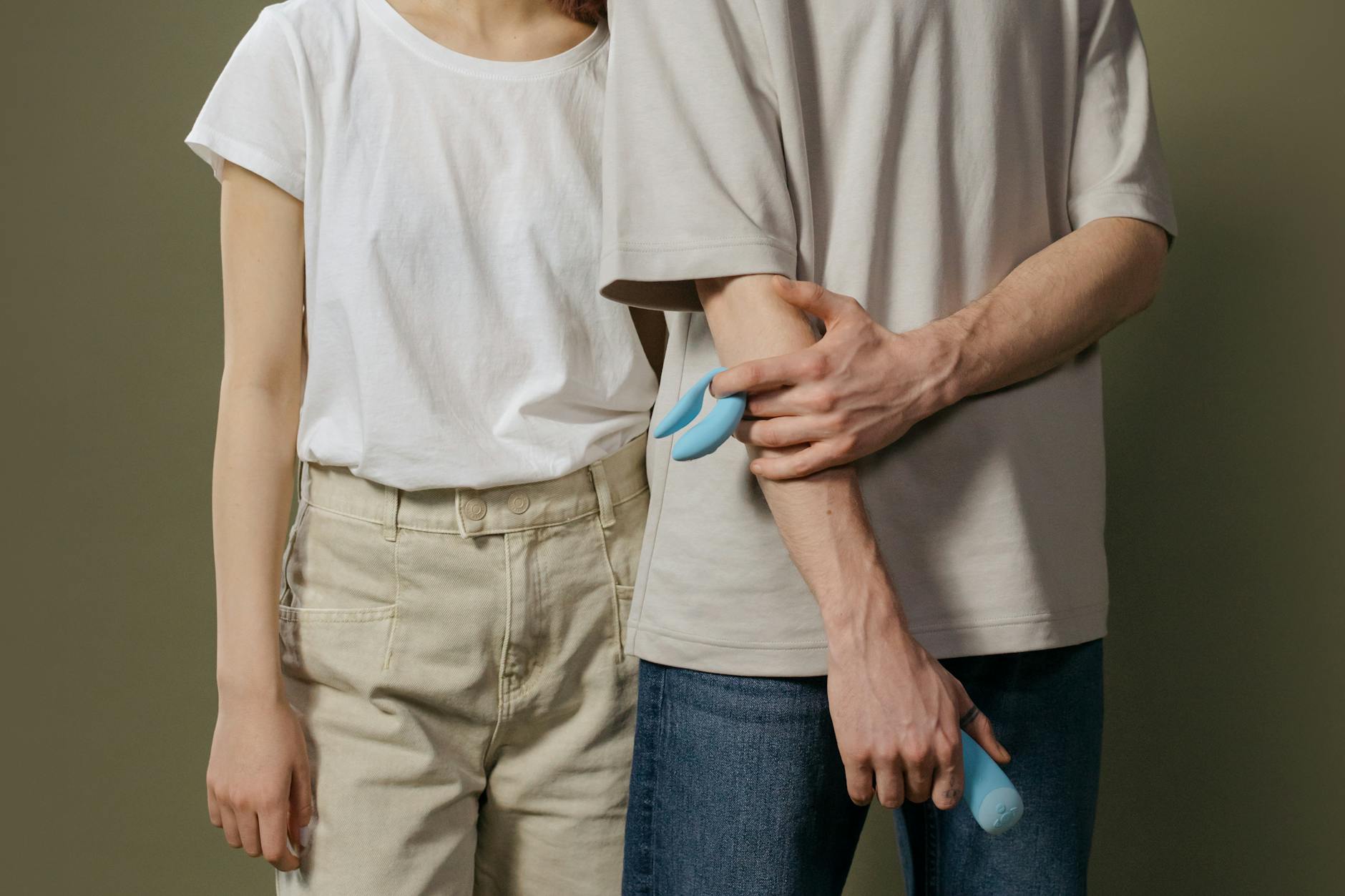
Your vibrator isn't broken. Your hormones are just talking.
Let's be real: you've probably noticed that your lemon vibrator or any clitoral vibrator doesn't feel the same every week. Some days it's transcendent. Other days it feels like you're trying to stimulate a wooden spoon. You might have assumed something was wrong with the toy, with you, or with your partner if you're using it together. The actual answer is simpler and way more useful: your hormones are cycling, and they're changing how your clitoris behaves.
I work with couples and individuals navigating intimacy shifts all the time, and cycle-aware pleasure is one of the most misunderstood pieces of sexual wellness. Once you understand what's happening, you can stop fighting your body and start working with it.
How hormones reshape clitoral sensitivity
Your menstrual cycle doesn't just affect fertility. It rewires your entire nervous system in a 28-day rhythm. Estrogen peaks right before ovulation, and that surge makes your clitoris more sensitive, more engorged, and faster to respond. Your skin becomes more reactive. Blood flow increases. A lemon vibrator or any clitoral suction toy becomes almost hyperresponsive during this window.
Then progesterone rises after ovulation, and everything changes. Clitoral sensitivity drops. Arousal takes longer to build. It's not that you've lost desire. It's neurochemistry. The tissue gets less plump, blood vessels constrict slightly, and your nervous system becomes less reactive to the same stimulation you loved five days earlier.
During your period itself, prolactin (the hormone that rises after orgasm) is already elevated, which can make climaxing feel harder. Your clitoris might feel more tender rather than more pleasure-seeking. Some people find that lemon vibrators feel too intense during menstruation. Others find they need more pressure and lower settings than usual.
The follicular phase: when your vibrator feels like it has superpowers
If you're tracking your cycle at all, the follicular phase is days 1 to 14 (roughly, since everyone's cycle is different). Estrogen is climbing, and so is your sensitivity. Your clitoris is becoming more engorged and more responsive.
Here's what this means for your lemon vibrator experience. You might notice that lower settings feel more effective than they usually do. You might orgasm faster or more intensely. Warm-up time drops. Your body feels more "eager." This is not your imagination, and it's not just psychological. The tissue of your vulva is actually swelling slightly and becoming more sensitive to touch and vibration.
If you use a partner during this phase, you might find that the same intensity you enjoy during ovulation feels too strong earlier in your cycle. Some people dial back to pattern 2 or 3 on their lemon clitoral vibrator when they could comfortably use patterns 4 or 5 at peak fertility.
The ovulation window (roughly days 12 to 16) is when sensitivity peaks. This is when you might experiment with higher settings on your Hello Nancy lemon vibrator that feel overwhelming other times. Your orgasms might be more intense. Pleasure often feels effortless. Take advantage of this window without judging yourself for needing different settings during other phases.
The luteal phase: recalibrating for lower sensitivity
After ovulation, progesterone becomes the dominant hormone. This is days 15 to 28, and everything flattens. Your clitoris becomes less responsive. Arousal takes longer. The tissue is less engorged, which means less immediate sensation from vibration.
This is when many people with vulvas feel discouraged about their pleasure. They compare the effort needed now to the ease of ovulation week and assume something is wrong. What's actually happening is normal, cyclical, and temporary.
During this phase, you might need to warm up longer. You might need higher intensity settings on your lemon sucker or clitoral vibrator. You might need a combination of types of stimulation instead of vibration alone. Some people layer in partner touch, fantasy, or a longer buildup period. Others find that they prefer partnered sex during the luteal phase because the shared attention and slower pace works better than solo vibrator use.
The luteal phase is also when pelvic floor tension tends to increase. If your vibrator feels uncomfortable or if you're having trouble reaching orgasm, your pelvic floor might be doing the work. Taking time to breathe, relax, and warm up longer often helps more than switching to a stronger toy.
Why lemon vibrators specifically work well across cycle phases
Clitoral suction toys like the lemon vibrator (the Lem) have a particular advantage across hormonal shifts. Because suction creates stimulation through pressure and pulse rather than mechanical friction, they're easier to modulate based on where you are in your cycle. You can use lower intensities during peak sensitivity without overstimulation, and you can layer in higher patterns when you need more sensation during the luteal phase.
The technology is gentle enough that it works during menstruation without tenderness, but responsive enough during ovulation that you don't feel like you're missing out. That versatility matters when your body is asking for different things week to week.
Building a cycle-aware pleasure routine
Here's what I recommend to my clients: track your cycle for two months alongside your pleasure notes. You don't need an app. Just jot down which day of your cycle it is and how your lemon vibrator felt that day. Did it feel amazing? Meh? Tender? What settings worked?
After two cycles, patterns emerge. Most people find that one or two weeks of the month feel "on" and the rest feel like they require more work. Once you know your personal rhythm, you can stop being surprised and start planning.
During your sensitive weeks, give yourself permission to use lower intensities. There's no prize for needing pattern 5 when pattern 2 gets you there. During your low-sensitivity weeks, give yourself extra time. Warm up for 20 minutes instead of 10. Use your vibrator differently. Some people find that combining visual stimulation, fantasy, or partner participation makes a huge difference.
If you're in a relationship, sharing your cycle data with your partner transforms the dynamic. You're not suddenly "not interested" or "not working right." You're on day 18 of your cycle and that's a day that takes longer. That's information, not a problem.
When hormonal shifts become painful
Some people experience actual pain or severe tenderness during certain cycle phases. This might mean your clitoris is more reactive, your pelvic floor is more tense, or you're dealing with something like vaginismus or vulvodynia that fluctuates with your cycle.
If vibration feels painful rather than just "less responsive," pause and assess. Are you actually aroused, or are you trying to force it? Sometimes we power through low-desire weeks instead of letting our bodies ask for something different. Other times, pain is real and needs attention.
If pain is consistent, talk to a gynecologist, especially one familiar with pelvic floor dysfunction. Cycle tracking can help you explain to them exactly when the pain shows up, which makes diagnosis faster.
The myth of consistency and what to do instead
Most sexual health advice assumes your body should respond the same way every time. It shouldn't. Your body is designed to fluctuate. Expecting your lemon vibrator to feel identical every week is like expecting your energy levels, your skin, and your mood to stay flat all month. They don't, and your sexuality doesn't either.
The people I work with who feel most satisfied aren't the ones who found the "perfect" vibrator. They're the ones who learned to work with their own cycles instead of against them. They adjusted expectations. They communicated with partners. They gave themselves permission to need different things on different days.
Your clitoral sensitivity is not a flaw. It's information. Start paying attention to it.
Frequently asked questions
How soon after starting my period does my sensitivity start to increase?
For most people, the biggest shift happens around days 7 to 10, as estrogen starts climbing. But every body is different. Some people notice sensitivity increasing by day 3. Others don't feel a shift until closer to ovulation. That's why tracking your own cycle matters more than any general timeline.
Can I use my lemon vibrator during my period?
Yes, absolutely. Some people find that lower settings feel better during menstruation because of increased tissue sensitivity. Others are fine with their usual settings. A few people find vibration during their period changes the way cramping feels. There's no rule. Your body will tell you if it works for you.
Does hormonal birth control change how my clitoral vibrator feels?
It absolutely can. Hormonal birth control flattens your natural cycle, which means less extreme fluctuations in sensitivity. Some people report feeling more consistently responsive on hormonal contraceptives. Others feel less responsive overall. The effect varies widely depending on the type of hormone and the dose. If you notice a change when you start or stop contraception, that's normal and worth noting.
Why does my clitoris feel numb after ovulation?
It's not numb, it's desensitized relative to ovulation week. Progesterone is doing its job. Your nervous system becomes less reactive to stimulation. This usually goes away within a few days after your period starts. If numbness is severe or persistent, mention it to your doctor.
Should I choose a different vibrator for different phases of my cycle?
You don't need to. A quality lemon clitoral vibrator like Hello Nancy's Lem works across all phases because of its versatile intensity settings and suction design. That said, some people do enjoy having options. A lower-intensity toy for sensitive weeks and a higher-intensity option for low-sensitivity weeks can make pleasure feel easier. It's not necessary, but it's nice.
What if my cycle is irregular? Can I still track my vibrator response?
Yes. Track it anyway. Even irregular cycles have patterns if you look at a few months of data. You might notice that your sensitivity shifts every 25 days instead of 28, or that it peaks twice. That information is still useful, even if it doesn't fit the standard 28-day model.
Your cycle is not your enemy
I've spent years listening to people apologize for their hormonal shifts. "I'm sorry I don't want to tonight." "I'm sorry I need something different." These aren't apologies situations. Your body cycling through different sensitivities isn't a failure of desire or responsiveness. It's information.
Once you understand that your lemon vibrator feels different week to week because your hormones are doing exactly what they're supposed to, you stop blaming yourself and start problem-solving. You give yourself longer warm-up time in weeks that need it. You use lower settings without shame during your sensitive window. You communicate with partners about what you need.
Your pleasure matters. And it matters that your pleasure is allowed to change. Let it.
If you're navigating these shifts within a relationship and want help communicating about them, reach out. I work with couples on exactly this kind of thing.