Here's the thing about introducing toys to a partner
One person's curiosity becomes the other person's anxiety real fast. You're excited about exploring with a lemon vibrator. Your partner hears "you're not enough for me" or worries they'll feel like an outsider in your own bed. Neither of those conversations is actually happening, but both are happening in your heads. The gap between those interpretations is where a lot of couples get stuck.
I've worked with dozens of couples navigating this exact dynamic. The good news: it's fixable. The better news: the conversation itself often brings people closer than they've been in years.
Why this specific friction shows up
Toys aren't neutral objects in a relationship. They carry baggage. For one partner, a lemon vibrator represents freedom, exploration, and self-knowledge. For the other, it might feel like rejection, inadequacy, or a sign the relationship is shifting in ways they didn't sign up for. Neither reaction is wrong. Both are rooted in legitimate concerns about safety, pleasure, and belonging.
Add in cultural messaging (toys are for people without partners, toys ruin intimacy, asking for a toy is basically asking for permission to cheat), and you're not just dealing with your own hesitation. You're wrestling with inherited shame that doesn't even belong to you.
The real conversation isn't about whether lemon vibrators are good. It's about whether you feel safe exploring together.
Starting the conversation without triggering defensiveness
Timing matters. Not during sex. Not during an argument. Pick a moment when you're both calm, fed, and have at least thirty minutes with nowhere to be. The kitchen table beats the bedroom.
Start with curiosity, not demand. "I've been thinking about trying something new. I'd love to explore with you, but I want to understand what you're comfortable with" lands differently than "I want to buy a toy."
Then actually pause. Let them respond. Don't fill the silence with reassurance or explanation. If they ask questions, answer them simply. "What would this mean for us?" deserves "I'm interested in trying something that might feel different for me. I want you there with me." Not "nothing would change" (dishonest) and not a five-minute monologue about why toys make sense statistically.
Understanding their resistance (it's rarely what it sounds like)
Your partner says: "I don't want you using a toy." What they might actually mean:
"I'm worried you'll prefer it to me." This is often fear of inadequacy. They need to know they're still necessary, still valued. Not because that's true in some abstract sense, but because it's true concretely in your relationship. Can you articulate why their touch matters? Can you use the toy in a way that includes them, not replaces them?
"I feel like I should be enough." Internalized performance pressure. They've absorbed the idea that a good partner makes toys unnecessary. Gently, you might say: "A good partner wants me to feel good. You want that too, right? This is part of that."
"I'm embarrassed." A lot of people genuinely feel awkward around sexual exploration. They grew up in environments where this wasn't discussed. They're not opposed; they're uncomfortable. That's fixable with time and normalizing language.
"I don't understand why you need it." Pure information gap. They don't know what lemon vibrators do, why sensation changes for people, or how external stimulation differs from partnered touch. Fill in the gaps without implying they should have known.
Your job isn't to convince them they're wrong. It's to help them feel heard enough to get curious.
The bridge: low-pressure introduction
Once they're not actively resisting, don't jump straight to using it during sex. That's a lot at once. Instead:
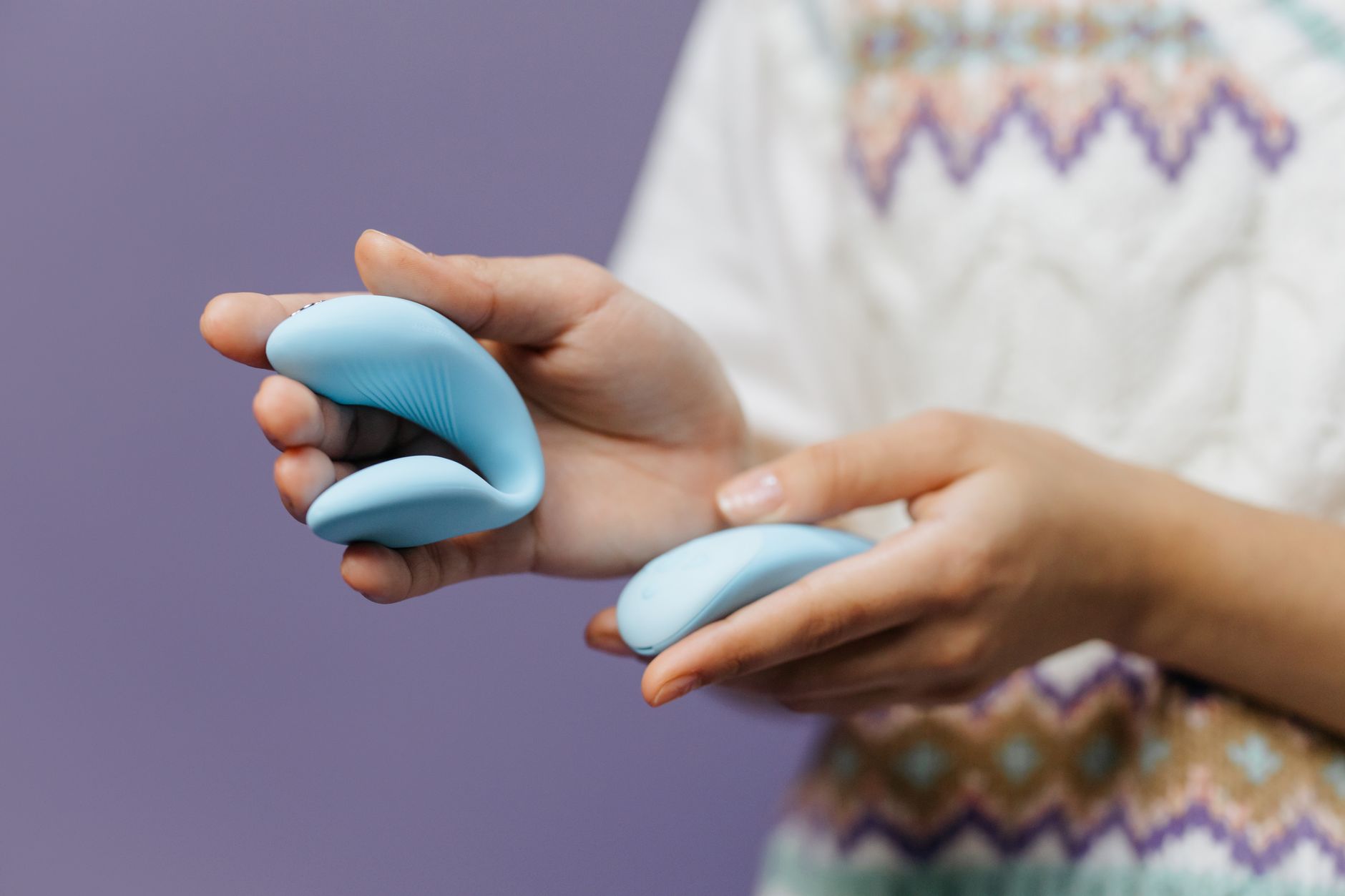
Show them the actual object. A lemon clitoral vibrator isn't intimidating when you can hold it, see it's small, understand it's just a tool. Demystification matters. "This is what it looks like. This is what it does. This is why people use it."
Talk about how you'd use it together. Maybe you use it solo while they watch. Maybe they control the settings. Maybe it's background stimulation while you focus on them. The specific scenario matters less than them feeling included and agency.
Set a boundary about pressure. "I'm excited to try this, but I never want you to feel like you have to participate. You can be present, or we can do something else. What would feel right to you?" This flips the dynamic from "you're resisting something I want" to "how can we do this together."
Consider starting with solo exploration in a non-sexual moment. Let them see lemon vibrators in a low-stakes context. Showering, getting ready, not in bed. The ordinariness dissolves some of the intimidation.
When they're still hesitant (and that's okay)
Some partners need time. Some partners will never be thrilled about toys, but they'll accept them. Some partners will want them integrated into every encounter once they try. All of those trajectories are normal.
If they're genuinely not ready, respect that. And I mean actually respect it, not perform respect while resenting them. A resentful partner who tolerates a toy you pushed them into will create exactly the tension you were trying to avoid.
You have options here. One is exploring with a clitoral vibrator solo and checking in periodically about whether they're ready to be involved. Another is expanding your sexual repertoire in ways they are excited about. Another is working with a sex therapist or couples counselor who can help you both understand what the resistance is really about.
Don't frame it as "you won't let me." Frame it as "we're working on this together, and I trust the timeline we're building."
What changes once they're on board
Honestly? A lot. People who move from hesitant to curious often become the most enthusiastic users. They'll surprise you with ideas. They'll ask questions about sensation. They'll want to experiment with different patterns and intensities. The conversation you were dreading becomes a doorway into intimacy.
Remember that their journey into comfort won't look like your journey. They might need to go slowly. They might need reassurance. They might need to check in during sex the first few times. That's not weakness. That's them rebuilding trust in a way that includes pleasure.
Use this as an opportunity to rebuild. Some couples have the best sex of their relationship after navigating this conversation successfully. Not because of the toy. Because of the vulnerability, the listening, and the mutual decision-making that preceded it.
The practical logistics
Sooner or later, you need to actually use the thing. Here's what helps:
Start with communication. "I'm going to try this now. Tell me if you want me to stop, slow down, change pace." Not during, before.
Low stimulation first. Don't go straight to the highest setting. Let them acclimate to the sensation, the sound, the sensation of it being near their body.
Keep their pleasure as the focus. If they're there, they should feel attended to. The lemon vibrator is a tool for them, not a replacement of your attention. Touch them elsewhere. Make eye contact. Keep them in the center of the experience.
If it feels awkward or uncomfortable, pause. There's no failure here. You're both learning. "That's not working for me right now" is just information. Try something else. There's no one right way to use a lemon sucker or a lemon vibrator. There's only the way that works for you both.
FAQ
Why is my partner threatened by the idea of a lemon vibrator?
Toys often trigger old narratives about inadequacy or infidelity. Your partner might be hearing "I don't want you" when you're actually saying "I want to expand what we experience together." The resistance usually isn't about the toy itself. It's about what the toy represents in their story about your relationship. Start by understanding their specific worry, then address that directly.
How do I know if my partner will eventually come around?
There's no universal answer, but curiosity is a good sign. If they're asking questions (even skeptical ones), engaging in the conversation, or willing to learn more, they're moving toward openness. If they're shutting down or repeatedly saying "no discussion," you might need external support to move forward. A couples therapist can help you both understand what's underneath the resistance.
Can we use lemon vibrators if my partner is uncomfortable with sex toys in general?
Yes, but context matters. Start by understanding what makes them uncomfortable. Is it social shame? Fear of inadequacy? Religious beliefs? Each of those requires a different approach. If it's shame, normalization helps. If it's fear, reassurance helps. If it's values-based, you need to respect that boundary and decide together whether there's room for compromise.
What if I want to use a lemon clitoral vibrator but my partner doesn't want one involved?
You have the right to solo pleasure. Period. If you want to use a vibrator alone, that's your call. What matters for partnership is honesty and respect for boundaries. You might say: "I'm exploring this on my own. I'm not hiding it, and it's not about you." Some partners will come around once they realize it's not a threat to your connection. Some won't. Both are valid responses.
How do we move past the awkwardness if we try a lemon vibrator and it doesn't work?
Acknowledge it directly. "That didn't feel right. Let's try something else." Not everything works for everyone, and that's fine. The point isn't the toy. The point is exploring together. If one approach doesn't land, you've got unlimited others. Stay curious. Stay playful. Normalize the fact that sex is sometimes awkward, and that's human.
Should I hide my lemon sucker if my partner doesn't want to see it?
No. Hiding things increases the likelihood they'll feel betrayed if they find out. Honesty about what you're exploring builds trust, even if they're not involved. You might say: "I'm going to use this when I have time alone. I'm telling you because I respect you and our relationship." That's very different from sneaking around.
The bottom line
Introducing any toy to a relationship where one partner is hesitant requires patience, honesty, and a genuine willingness to understand their experience. It's not about convincing them that lemon vibrators are objectively good. It's about building a conversation where both people feel safe and valued.
The couples who navigate this best aren't the ones where someone capitulates to make their partner happy. They're the ones where both people get curious about what the other person needs and how they can build that together. That's when toys stop being a point of friction and become a reminder that you're still invested in each other's pleasure.
If you need support having this conversation, reach out to our team. We're here to help.