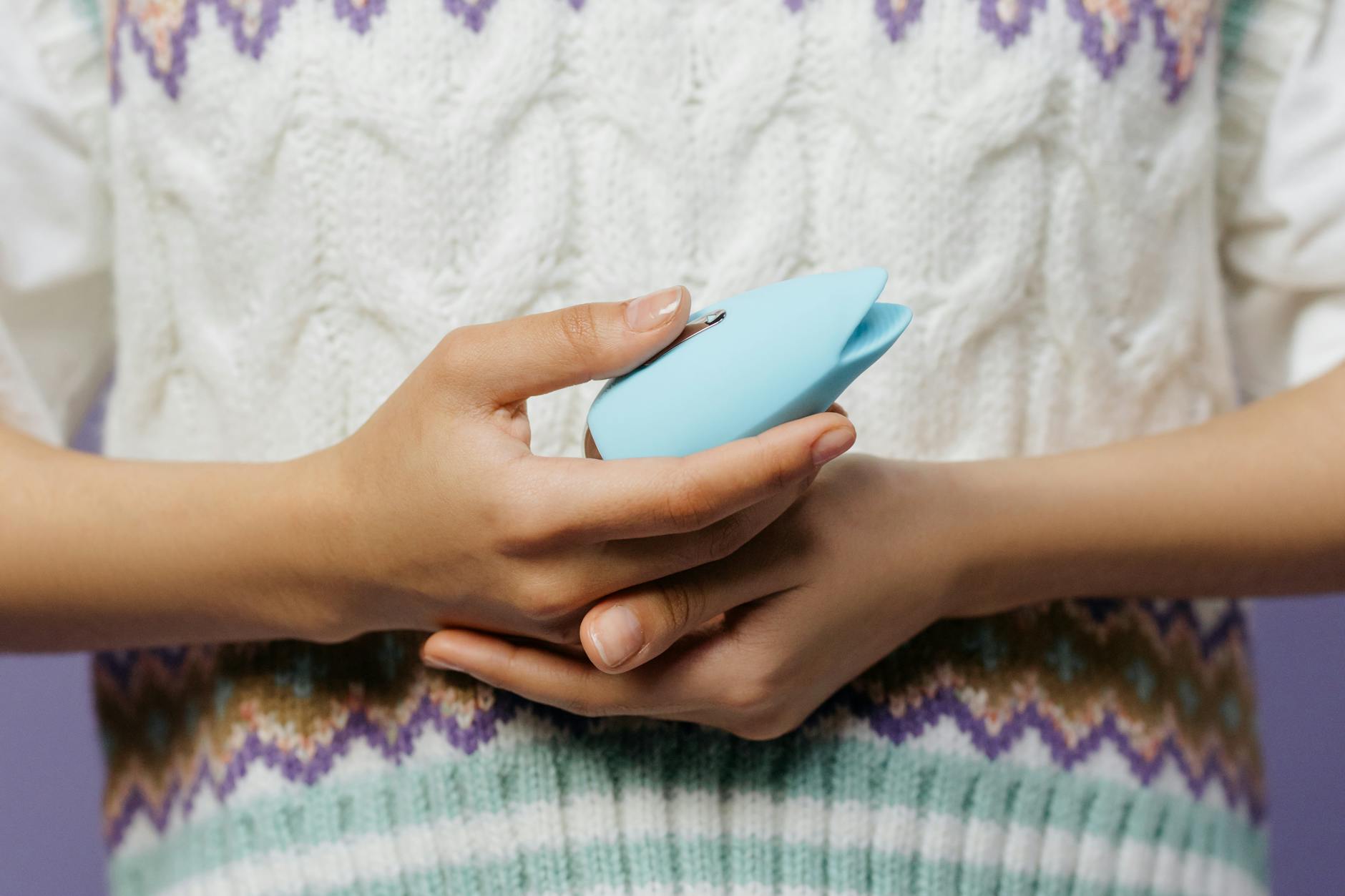
Let's start with the thing nobody talks about
Your twenties and thirties are not the same decade with a later start time. Your body, your brain chemistry, and what your nervous system does with pleasure are genuinely different. If you've had a lemon vibrator in your twenties and tried one again in your thirties, and it felt... different somehow, you're not imagining it.
This is not about getting older or "losing" anything. It's about how your neurochemistry, pelvic floor tension patterns, and arousal architecture actually evolve.
How arousal speed actually changes
In your twenties, arousal tends to be reactive and fast. You see something, think about something, or your partner does something, and your body responds almost immediately. There's minimal lag between stimulus and physical response.
Somewhere around 28 or 29, this starts to shift. Not dramatically. But noticeably. By your early thirties, arousal becomes more context-dependent. You need mental focus. The same thought that sparked immediate response at 22 now requires a few seconds of concentration to land.
This is partly hormonal (testosterone doesn't fluctuate as wildly, estrogen is more stable), but mostly neurological. Your brain gets better at filtering. You're more aware of your environment, whether your partner is fully present, whether you actually want this right now or you're just going through the motion.
With a lemon vibrator, this means the tool responds exactly the same way at 22 and 32. But your nervous system is asking for something different. The sensation still builds, but it requires more intentional setup. You can't just switch it on and expect immediate fireworks.
Sensitivity changes that seem backwards
Here's the counterintuitive part: in your thirties, many people report that they need less intensity to feel more. This sounds contradictory, but it's real.
Your twenties operate with a kind of novelty amplification. Everything feels intense because everything is somewhat new, or because your attention is divided across so many things (school, work, dating) that when you do focus on sensation, the relief is intense.
By your thirties, your nervous system has baseline. You've felt more. Your brain has categorized sensation more. So the massive intensity that felt incredible at 23 can feel a bit blunt at 33.
Meanwhile, subtler sensation (the kind a lemon vibrator excels at, with its suction and pulse patterns rather than crude vibration) starts to register more clearly. You can feel the difference between pattern 2 and pattern 3. You're aware of where exactly the stimulation is landing.
This is one reason why people often say lemon clitoral vibrators get better with time. It's not that the toy changed. It's that your perceptual sophistication increased.
The pelvic floor factor nobody mentions
Your pelvic floor gets chronically tenser as you age, and this accelerates in your thirties if you're under stress, sitting a lot, or managing multiple relationship responsibilities.
A tighter pelvic floor means:
- Arousal takes slightly longer to build because the tissues aren't as relaxed
- The sensations you feel get filtered through tension, so they register differently
- Orgasms, when they come, have a different quality (sometimes more localized, sometimes less full-body)
In your twenties, if you had tension, it was usually situational. Stress during finals, anxiety before a first date. In your thirties, baseline tension becomes a thing.
With a lemon vibrator, this means the warm-up period that felt optional at 22 becomes actually necessary by 32. You might need 5 minutes of breathing and light touch before the vibrator feels good, where at 22 you could skip straight to intensity.
What changes about desire patterns
Your twenties desire is often about novelty, excitement, or escape. You want sex to break the monotony, or because you're newly with someone, or because you're curious.
Your thirties desire becomes more about specific conditions. You want it when you're actually relaxed. When your partner is fully engaged. When you've had time to think about what you want. When the rest of your life feels manageable enough that you're not just collapsing into bed.
This is not less desire. It's more intentional desire.
For someone using a lemon vibrator, this means the context matters more. In your twenties, you could probably use it whenever, wherever, and get results. In your thirties, the best experiences happen when you've created some actual space. When you're not mentally running through tomorrow's to-do list. When you've given yourself permission to close the door and focus.
How your nervous system's pleasure threshold shifts
Your brain literally rewires its pleasure response as you age. This is neuroplasticity in real time.
In your twenties, your dopamine system is primed for novelty and intensity. Anything that's stimulating enough to break through the noise gets registered as rewarding.
In your thirties, your brain has learned to distinguish between different types of pleasure. Orgasm feels different than it did. Building arousal feels different. The satisfaction you get from connection versus from pure stimulation becomes more nuanced.
A lemon vibrator works with this, not against it. Because suction-based stimulation creates a more complex sensory experience than vibration alone, your thirty-something brain actually tracks it better. There's more information to process, which paradoxically makes the experience feel richer.
The role of life stress and distraction
Your twenties, for many people, come with fewer baseline life stressors. Or the stressors feel temporary. Exam season ends. The job search concludes. The relationship either works out or doesn't.
Your thirties tend to have more ongoing, simultaneous stressors. Work that doesn't have a finish line. A relationship that requires constant maintenance. Maybe kids, or caring for family, or financial responsibilities that don't resolve.
This baseline stress directly impacts sensation. When your nervous system is activated by ongoing stress, it's in a semi-heightened state. This can make pleasure harder to access, because your brain is already partially flooded with cortisol and adrenaline.
It also means you need more intentional downregulation before pleasure can really land. A lemon vibrator at 33 works best when you've actually given yourself 10 minutes to shift out of alert mode first. At 23, the vibrator itself could do that switching work for you.
Why lemon vibrators specifically adapt well to this shift
Lemon clitoral vibrators, with their suction and pulse patterns, require more active attention from your nervous system than a simple vibrator. You're tracking a pattern. You're feeling the suction and release. This actually helps in your thirties because it gives your brain something to focus on other than the stress background noise.
Meanwhile, the suction mechanism doesn't wear out sensitivity the way intense vibration can. So as your thirties nervous system becomes more sophisticated about sensation, the tool doesn't numb you out.
The good news about your thirties arousal
Everything I've described sounds like loss. It's not. It's recalibration.
Many people report their most intense, satisfying orgasms in their thirties and beyond. Not despite the changes I've listed, but because of them. Your brain knows what it likes. Your body has learned to relax into pleasure differently. You're not chasing novelty anymore. You're actually present.
This is why how you use lemon vibrators for better sensation in your thirties matters more than just having the tool. The technique, the setup, the mindset, become the real variables.
The pelvic floor floor work piece
If you're noticing arousal takes longer, or sensation feels muted compared to your twenties, pelvic floor relaxation exercises are genuinely worth exploring. This is especially true if you spend your day stressed or sitting.
You don't need a physical therapist to start. Try this: lie down, put one hand on your belly, one on your pelvic area. Breathe into your belly for 2 minutes, focusing on releasing the pelvic floor with each exhale. Then use your lemon vibrator. You'll likely feel a difference immediately.
Over time, regular relaxation work combined with lemon vibrator use can actually retrain your baseline pelvic floor tension downward, which means arousal gets faster and sensation gets clearer.
When to adjust your setup
If you're moving from twenties to thirties patterns, a few practical shifts help:
Start with lower intensity patterns than you used to prefer. Let your nervous system find the sweetness point rather than jumping to maximum. Create 10 minutes of actual downtime before you start. No phone. No mental list-making. Just breathing and presence.
If you're using a lemon vibrator with a partner, let them know the timing is different now. Earlier arousal doesn't mean less arousal. It just means it's more intentional.
Most importantly, understand that what felt good at 23 might not be the same at 33, and that's not a failure. It's an upgrade.
FAQ: Lemon Vibrators and Age-Related Sensation Changes
Why does arousal take longer in my thirties than it did in my twenties?
Your neurochemistry shifts. In your twenties, your brain is primed for novelty and quick responses. By your thirties, your nervous system becomes more selective. You need mental focus and context to access arousal. This isn't slower desire. It's more intentional desire. Your brain is filtering more information and asking for genuine engagement rather than automatic response.
Can a lemon vibrator help with the slower arousal I'm experiencing?
Yes, but differently than it might have in your twenties. A lemon vibrator's suction and pulse patterns give your brain something specific to focus on, which actually helps you downregulate from background stress and access arousal faster. It also works with your thirties sensitivity rather than against it, so you get more nuanced sensation with less numbing effect.
Is it normal for my sensitivity to feel different now that I'm in my thirties?
Completely normal. Your nervous system becomes more sophisticated about sensation. You can feel subtler patterns. You might need less intensity to feel more pleasure. This is often experienced as an upgrade, not a downgrade. If it feels like numbness rather than recalibration, that could point to stress, hormonal changes, or medication side effects worth exploring with a doctor.
How do pelvic floor tension and sensation connect?
A tight pelvic floor filters sensation and slows arousal. If your baseline tension is higher in your thirties (common under stress or with desk work), you'll notice slower arousal and less vivid sensation. Relaxation work before using a lemon vibrator can shift this quickly. Even 5 minutes of breathing and gentle pelvic floor release changes how sensation registers.
Do I need to use my lemon vibrator differently now than I did in my twenties?
Yes. Allow longer warm-up time. Create actual mental space before you start. Use lower intensity patterns and let them build rather than jumping to maximum. And pay attention to context. In your thirties, when you use it matters as much as the tool itself. Relaxed, focused time produces better results than rushed or stressed attempts.
Can lifestyle changes affect how my lemon vibrator feels?
Absolutely. Stress, sleep quality, alcohol, exercise, and how much you're sitting all directly impact arousal speed and sensation clarity. If you're noticing a bigger change than age alone would explain, audit those variables. Better sleep and less baseline stress make a noticeable difference in how quickly and vividly sensation registers with any toy.
What actually matters
Your thirties aren't a downgrade from your twenties. They're a different operating system. Your lemon vibrator works with both, but the way you approach pleasure genuinely changes.
Understanding that change, rather than fighting it or ignoring it, is the difference between feeling like you've lost something and realizing you've actually gained sophistication.
If you're navigating these shifts and want personalized guidance on what works for your body now, reach out. These transitions are worth understanding, not just enduring.