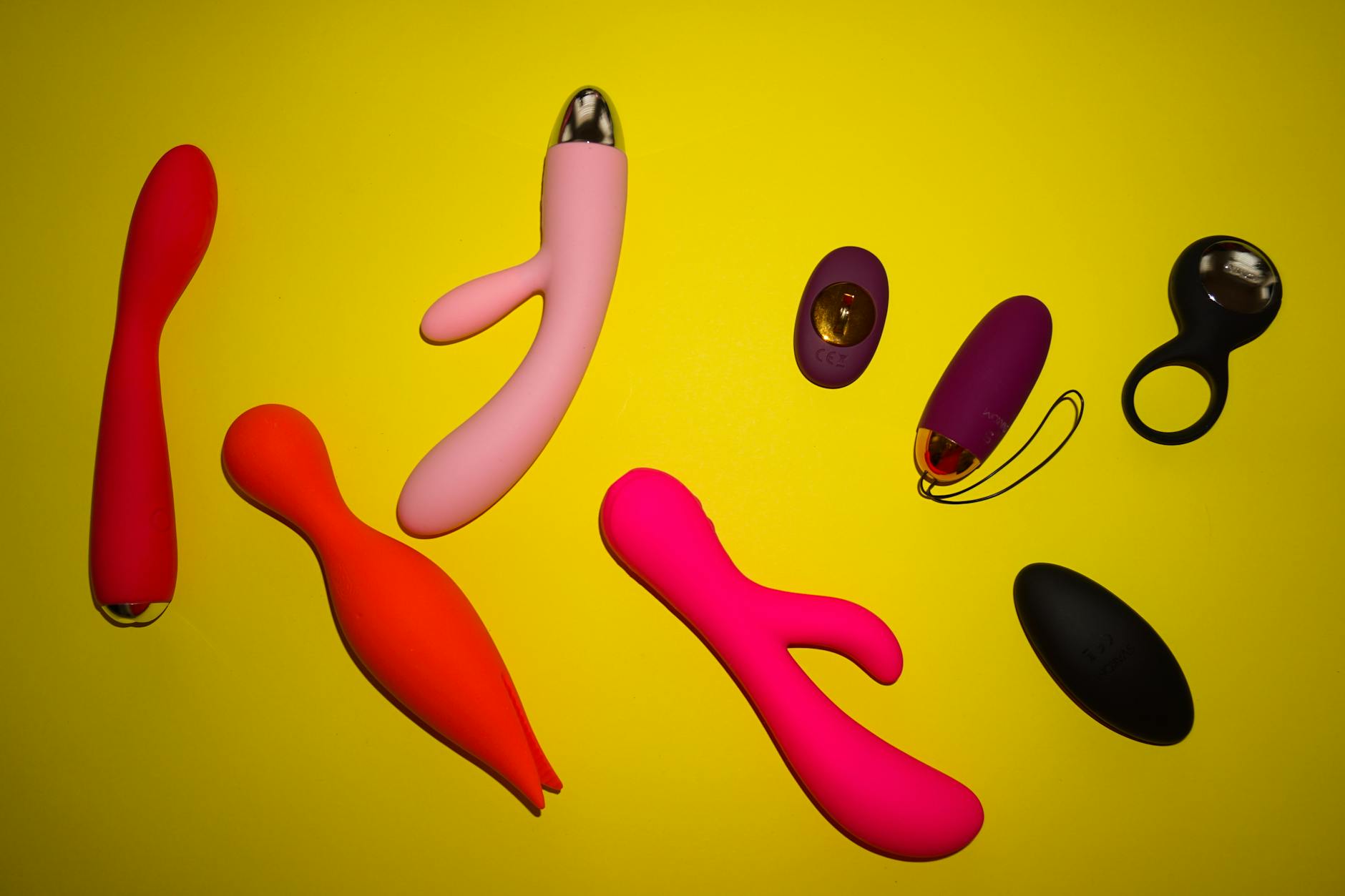
Let's start with what your partner is really afraid of
It's not about the toy. I've worked with hundreds of couples, and when a partner resists toys, they're almost always saying one thing without words: "If you need this, I'm not enough." That fear is genuine. And it's worth taking seriously, not dismissing.
The good news is that fear is based on a misunderstanding about how pleasure works. Lemon vibrators and other clitoral vibrators don't replace partners. They work differently than hands or mouths. Understanding that difference changes the entire conversation.
Why your partner thinks toys are a threat
There's a persistent cultural narrative that sex should flow naturally from one person's body to another, and needing outside tools means something is broken. This is false. It's also deeply ingrained, which is why smart, progressive people still feel it.
Here's the actual threat hierarchy your partner might be processing: A toy means you enjoy sex more than you did with them. A toy means you'd rather have it than them. A toy means you're looking elsewhere for satisfaction. None of these is true, but they're all plausible-sounding if you're starting from the wrong baseline.
Add in the fact that many people have never been taught the difference between clitoral and other kinds of stimulation, and you have a partner who genuinely doesn't understand why a lemon vibrator (which uses suction instead of vibration) works differently than what their hands can provide.
The actual neurology
Your clitoris has 8,000 nerve endings concentrated in a space the size of a pea. When you're aroused, that area becomes more sensitive and engorged. A lemon vibrator creates rhythmic suction that engages those nerve endings in a way fingers, a mouth, or traditional vibrators cannot replicate.
This isn't supplemental pleasure. It's a different pathway. Think of it like the difference between a massage and stretching. Both are touch. They work on different systems.
Your partner's hands can do many things a lemon vibrator cannot. They can move unpredictably, hold you closer, respond to your breathing, communicate through pressure. The toy cannot. These are not interchangeable. They're complementary.
When you explain this to your partner, you're not saying "I need something you can't provide." You're saying "I want to explore a sensation that's only possible with this specific tool, and I want to explore it with you."
How to frame it in a way that lands
Timing matters. Don't introduce this during sex or in the moment of arousal. Pick a calm afternoon, no clothes off, no pressure. The goal is a conversation, not a negotiation.
Start with what's true: "I've been thinking about trying something new, and I want you to understand why before I ask you to consider it with me."
Then give him the neurology without jargon. "A lemon vibrator works through suction, not vibration. It stimulates my clitoris in a way that's different from what hands can do, kind of like how a scalp massage feels different than a shoulder massage. It's not replacement. It's addition."
Then the vulnerable part: "I know you might worry that if I use a toy, it means I'm not satisfied with you. That's not how this works. Pleasure isn't a competition. I want more sensation, and I want you to be part of exploring that."
Then the ask: "Would you be willing to try this together?"
If he says no, you have a different conversation. But most resistance dissolves when the fear underneath is named and addressed.
What happens when your partner watches you use a lemon vibrator
This is where the real shift happens. Many partners who are initially uncomfortable discover that watching their partner experience sustained, focused pleasure is actually a turn-on. You're not replacing them. You're showing them what pleasure looks like on your body, and that information is useful.
A lemon vibrator creates a different kind of intimacy than traditional sex. You're not performing for him. You're not managing his pleasure. You're focused entirely on sensation, and he gets to witness that. For many couples, this breaks a stalemate in the bedroom because it removes the pressure of "you need to make me come."
Some partners want to be involved. They might hold the toy, adjust the setting, watch your face. Others prefer to sit back. Both are fine. The point is that the toy becomes a tool you're using together, not a threat to the relationship.
The conversation after the first time
After you've tried a lemon vibrator together, check in. Not immediately after (you're both in the afterglow). The next day, or that evening.
"I felt close to you during that." Or "I felt seen." Or "I felt less pressure." These are conversation starters that reframe the experience as relational, not solo.
Ask him what he noticed. Felt. Feared. Most partners report that watching their significant other in pleasure is less threatening than they expected. Some say it's liberating because the pressure to be the sole source of pleasure lifts.
If he's still uncomfortable, you can explore why. Is it visual? Does the idea that you need tools hurt? Is he worried about his role? Different concerns need different solutions.
When to pause and get help
If your partner refuses to engage with the conversation, or shames you for wanting to explore, that's a relationship issue that goes beyond toys. A resistance to your pleasure, full stop, is worth addressing with a therapist. How Lemon Vibrators Help Rebuild Intimacy After Relationship Conflict digs deeper into this.
If he's willing to try but struggling with jealousy or inadequacy afterward, that's treatable. Couples therapy, especially Gottman Method work, can help him separate his self-worth from his ability to produce your orgasm. That's a skill, not an innate truth.
If he's willing and engaged but doesn't fully understand the mechanics, show him. Let him hold the lemon vibrator. Let him feel how it works. Demystification solves a lot of resistance.
Why lemon vibrators specifically work better for this conversation
There's something about the design of a lemon vibrator or other clitoral vibrator that feels less threatening than a traditional wand or bullet. It's smaller. It's specific. It's clearly designed for one thing. Partners often worry that a toy is "replacing" them, but a precision tool designed for clitoral stimulation reads differently. It's not a substitute penis. It's a tool.
The suction mechanism also produces a different sensation than vibration. If your partner is resistant, exploring the difference between how a lemon vibrator feels versus how a traditional vibrator feels can be a gateway. Many men discover that suction-based toys feel less competitive because they're not mimicking what they already do.
Start there. Why Lemon Clitoral Vibrators Work Better Than Vibration Alone explores this in depth.
The long game
Introducing a lemon vibrator to a resistant partner isn't about the toy. It's about establishing that pleasure is collaborative, that you're allowed to want things, and that exploration is safer together than alone.
Couples who navigate this successfully often report that their sex life opens up. Not just because of the new tool, but because the barrier of "I'm not allowed to want" falls away. You've had a hard conversation and survived it. That's relationship capital.
Your pleasure matters. Your wants matter. A partner who comes to understand that is a partner who's learned something about love.
FAQ
What if my partner says toys are "unnatural"?
So is antibiotics, birth control, and glasses. "Natural" is not the standard for good. A lemon vibrator doesn't harm you or your partner. If your partner's objection is purely ideological, ask him specifically what he's afraid will happen if you use one. Usually the fear, not the principle, is the real issue.
Can I use a lemon vibrator secretly if my partner is uncomfortable?
Technically, yes. Relationally, no. Trust breaks when pleasure is hidden. If your partner refuses to engage after a direct conversation, that's a different problem. Solo exploration is your right, but in a partnership, this works best as a conversation, even a difficult one.
Does using a lemon vibrator during partnered sex change the intimacy?
Often it improves it. When you're relaxed enough to enjoy the sensation, you're more present. You're not managing your body's response or faking anything. Many partners report that their significant other is "more there" during sex when a lemon vibrator is involved because the pressure to perform is gone.
What if my partner wants to use the lemon vibrator on me but I'm nervous?
That's a power shift worth exploring slowly. Start with him holding it while you guide his hand. Let him feel the sensation. Some partners feel less threatened when they're the one controlling the tool. Others find it too intimate too quickly. Go at your pace, and communicate constantly.
Should I ask permission to use a lemon vibrator?
In a partnership, I'd frame it as "I want to try this. I'd love your support, but I'm not asking your permission." Your body is yours. But the way you introduce change in a shared bed matters. The conversation matters. His feelings matter, even if his discomfort isn't a veto.
How do I know if my partner's discomfort is just fear, or a real dealbreaker for him?
There's a difference between "I'm scared" and "I don't want this in our relationship." The first can shift with conversation and time. The second is an incompatibility worth addressing openly. If your need for sexual exploration and his resistance are both firm, you might need external help to bridge that gap. How Lemon Vibrators Help Rebuild Connection When Partners Have Mismatched Desire explores this further.
The truth underneath
A partner's resistance to lemon vibrators or other toys usually isn't about the tool. It's about fear, control, or a misunderstanding of how pleasure works. When you address the fear, demystify the mechanism, and frame the conversation as collaborative exploration rather than a threat, most resistance dissolves.
Your desire for more sensation is legitimate. Your right to explore pleasure is legitimate. And a partner who learns to support that, even if they were initially uncomfortable, often becomes closer to you because of it. The conversation itself is the intimacy.